


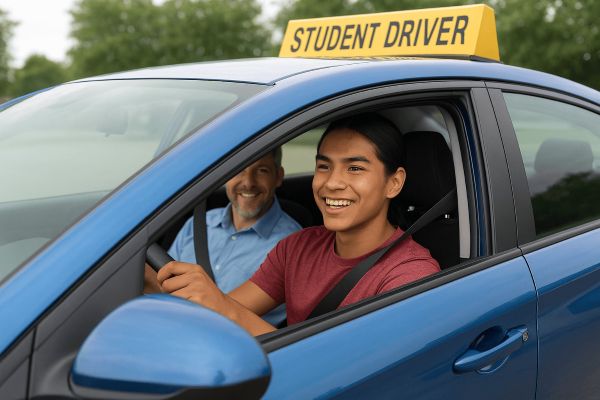
Do You Need a Learner's Permit to Take Driving Lessons in the USA in 2025?
Learning to drive is one of the most exciting milestones in life. It represents independence, freedom, and the ability to explore the world on your own terms. But if you're preparing to take driving lessons in the USA in 2025, one important question likely comes to mind — do you need a learner's permit before starting your lessons?
The answer depends on where you live, your age, and the type of driving instruction you plan to receive. In this detailed 2025 guide, we'll explore how learner's permits work, when they're required, and what's changed in recent years to make the learning process more flexible for new drivers.
Before this, let's explore Horizon Driving School in Ohio, USA here.
Understanding What a Learner's Permit Is
A learner's permit, also called an instruction permit or temporary permit, is an official document issued by your state's Department of Motor Vehicles (DMV). It allows you to legally practice driving before you earn your full driver's license.
However, it comes with restrictions — for example, you must usually be accompanied by a licensed adult driver (often 21 or older), avoid driving at night, and steer clear of highways until you gain more experience.
The purpose of the learner's permit is to ensure you have a structured and supervised learning period before becoming a fully licensed driver. It's essentially a safety measure to reduce risk while new drivers build confidence and skills.
Do You Need a Learner's Permit Before Driving Lessons?
In most states across the USA, yes — you need a learner's permit to take behind-the-wheel driving lessons. Driving schools and certified instructors typically require you to present your permit before you can sit behind the wheel.
However, the details vary from state to state. For example:
- California:Teens under 18 must first complete a driver's education course, pass a written knowledge test, and obtain a learner's permit before taking in-car lessons.
- New York:A learner's permit is mandatory before any professional driving school can offer practical lessons.
- TexasThe same rule applies — you need a learner's license to begin on-the-road practice.
That said, there are some exceptions depending on the type of training you're pursuing.
Exceptions: Classroom or Simulation Lessons Without a Permit
If you haven't yet received your learner's permit, you can still take classroom-based driving lessons or online driver's education courses in most states. These lessons focus on theory rather than hands-on driving.
In 2025, many driving schools in the U.S. have expanded their virtual learning programs, allowing students to study road rules, traffic signs, and safe driving habits from home before taking their written test.
Some states even use AI-powered driving simulators that allow students to "practice" driving virtually without an actual permit. These simulators use realistic road scenarios to teach hazard perception, reaction times, and parking skills. While these sessions don't count as official behind-the-wheel training, they're a valuable first step before applying for your learner's permit.
Why You Need a Learner's Permit for On-Road Lessons
Driving schools and instructors must comply with state laws and insurance policies. Since you'll be operating a vehicle on public roads, even under supervision, you need legal permission to do so — and that's what the learner's permit provides.
Without it, both the student and instructor could face legal penalties. Driving without a valid permit or license is considered an offense in all U.S. states, and insurance coverage would be void in the event of an accident.
Moreover, having a learner's permit ensures that the student has already demonstrated a basic understanding of road rules and passed a written exam, making practical instruction safer and more efficient.
How to Get a Learner's Permit in 2025
The process for obtaining a learner's permit in 2025 remains similar to previous years but with more digital conveniences:
- Meet the age requirement — Most states allow teens to apply for a learner's permit at 15 or 16 years old, though the minimum age varies slightly. Adults learning to drive for the first time can apply at any age.
- Complete a driver's education course (if required) — Some states require completion of an approved course before you can take the written test.
- Submit an online application — In 2025, most DMVs have fully digital systems, allowing you to submit applications and schedule appointments online.
- Provide documentation — You'll need proof of identity, residence, and in some cases, school enrollment or parental consent (for minors).
- Pass the written knowledge test — This test covers road signs, traffic laws, and safe driving practices. Many states now offer the option to take it online with identity verification.
- Pass a vision test — Ensures you meet the minimum eyesight requirements to drive safely.
- Pay the required fee — Permit fees vary between $10 and $50 depending on the state.
Once you've received your learner's permit, you can legally start behind-the-wheel lessons with a certified instructor or a licensed adult driver.
How the Process Evolved by 2025
The driving education landscape has evolved significantly in 2025, thanks to technology and updated safety standards. Here are a few notable trends:
- Online Learning Platforms: States now recognize online and app-based driver education courses that track progress automatically.
- Remote Knowledge Testing: Many DMVs allow learners to take their written permit exams remotely under monitored conditions.
- Digital Permits: Some states have started issuing digital learner's permits accessible through mobile apps, eliminating the need for physical cards.
- Increased Focus on Road Safety and Sustainability: Lessons often include segments on electric vehicles, eco-driving, and advanced driver-assistance systems (ADAS).
These improvements make it easier, faster, and more accessible for new drivers to start their journey toward a license.
What Happens After You Get the Learner's Permit?
Once you have your learner's permit, you can begin supervised driving practice. Most states require a minimum number of practice hours before you can take the road test for a full license.
For instance:
- California: 50 hours of supervised driving (10 at night).
- Florida: 50 hours total, including 10 at night.
- Illinois: 50 hours total with 10 at night.
During this period, it's important to drive in a variety of conditions — daylight, nighttime, rain, and highways (if allowed) — to build real-world experience.
What If You're an Adult Learner in 2025?
For adults (18 and older) who are learning to drive for the first time, the rules can be slightly different.
Some states allow adults to take driving lessons without a learner's permit, as long as they're enrolled in a licensed driving school and have temporary permission to practice. However, these are limited cases — most states still require a learner's permit for liability and safety reasons.
Adults also have the option to complete accelerated driving courses, which combine classroom, simulator, and road sessions within a few weeks, helping them progress quickly toward a full driver's license.
Final Thoughts
So, do you need a learner's permit to take driving lessons in the USA in 2025?
In most cases — yes, you do.
While classroom and simulator lessons can begin without one, any actual behind-the-wheel training requires a valid learner's permit. This rule ensures safety, accountability, and compliance with state laws.
However, the process of getting a permit has become far more convenient in 2025. With online testing, digital permits, and advanced training technology, learning to drive is now smoother, smarter, and safer than ever before.
Whether you're a teen excited to earn your first set of wheels or an adult finally ready to conquer the road, getting your learner's permit is the first official step on your driving journey — one that opens the door to freedom and independence.