


Driving Rules for 17-Year-Olds in Ohio, USA in 2026
For a 17-year-old in Ohio, driving is no longer just about learning how to steer, brake, and signal. It is about stepping into a system built to protect new drivers while giving them room to grow. In 2026, Ohio still uses a graduated driver licensing structure for young drivers, and the state’s official materials make one thing clear: a 17-year-old is not treated like a fully unrestricted adult driver yet. Ohio defines a probationary license as the license issued to a person between 16 and 18 years of age, and the teen-driving rules are written around that stage of experience.
Explore Horizon Driving School in Ohio, USA here.
The journey usually begins before age 17. Ohio allows knowledge testing at age 15 years and six months, and after passing the vision and knowledge tests, a new driver must buy a Temporary Instruction Permit Identification Card, or TIPIC, within 60 days. If the applicant is under 18, a parent or guardian must co-sign the permit application. That permit is the doorway to practice driving, not a free pass to drive solo.
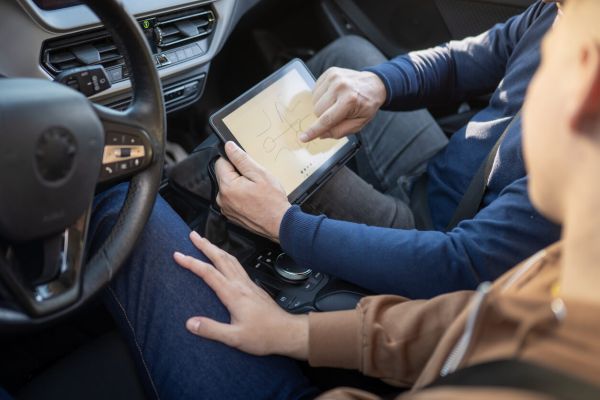
For a 17-year-old who is still on a permit, Ohio’s practice-driving rules are specific. A driver age 16 to 17 may practice with any valid licensed driver age 21 or older in the front passenger seat, but between midnight and 6 a.m. the supervising adult must be a parent, guardian, or custodian with a valid driver license. The permit holder must carry the TIPIC at all times, the supervising adult cannot be intoxicated, everyone must wear safety belts, the number of occupants cannot exceed the number of seat belts, and mobile device use while driving is prohibited.
To move from permit holder to licensed driver, Ohio requires under-21 applicants to complete driver education. The official manual says that a driver under age 21 must complete 24 hours of classroom or online instruction, 8 hours of driving time with a licensed training school, and 50 hours of driving with an eligible licensed driver, including at least 10 hours of night driving. For drivers under 18, the TIPIC must be held for at least six months before the road test and license purchase step.
Once the road test is passed and the probationary license is issued, a 17-year-old can drive without a supervising adult in the front seat, but the freedom still comes with guardrails. During the first 12 months of holding a driver license, Ohio restricts driving from midnight to 6 a.m. unless the teen is accompanied by a parent or guardian, driving to or from work with employer documentation, or traveling to or from an official school-sponsored or religious event with the proper documentation. In that same first year, the teen may not drive with more than one non-family member passenger unless a parent or guardian is present.
After that first year, the nighttime rule changes but does not disappear. The Ohio manual says that after the first 12 months of holding a driver license, the restriction becomes 1 a.m. to 5 a.m., with the same kinds of exceptions for a parent or guardian, work, school, or religious travel. That means a 17-year-old who has had a probationary license for more than a year still does not have the same nighttime freedom as an experienced adult driver.
Ohio also takes distracted driving by young drivers seriously. State law says that no holder of a temporary instruction permit under 18 and no holder of a probationary driver’s license may drive while using an electronic wireless communications device. The law does allow limited exceptions for emergencies, for a vehicle that is parked outside a lane of travel, and for hands-free or voice-operated navigation when the driver does not manipulate the device while driving. A violation can lead to a $150 fine and a 60-day license or permit suspension, with harsher penalties for repeat violations.
Safety-belt compliance matters too. The Ohio manual says the driver and all passengers must wear safety belts, and the number of occupants cannot exceed the number of seat belts installed in the vehicle. For a new teen driver, these may sound like simple reminders, but they are also part of the legal and practical foundation of responsible driving. Ohio’s rules are built on the idea that a young driver should never be allowed to turn a small mistake into a serious crash.
There is also a deeper message behind the rules. Ohio’s approach recognizes that skill grows in stages. First comes the permit, then supervised practice, then a probationary license, and only after time and good driving does a young driver get closer to full independence. That is why the state requires supervised hours, night-driving practice, and restricted nighttime driving for new license holders. It is not punishment; it is progression. The law is trying to make sure a teen learns judgment alongside technique.
For 17-year-olds in 2026, the smartest way to think about Ohio’s driving rules is this: the license is not a trophy, it is a responsibility. A teen who drives carefully, avoids phone use, respects curfew rules, keeps the car seat-belted and legal, and documents exceptions properly is doing more than following the law. They are building habits that can last for years. In a state where young drivers are still expected to prove themselves over time, consistency matters as much as confidence. The road is open, but Ohio wants every 17-year-old to earn speed with maturity, freedom with discipline, and independence with safety.
In the end, Ohio’s teen-driving system for 17-year-olds in 2026 is less about limiting movement and more about shaping a safer driver. The state gives young people room to grow, but it also draws a clear line around risk: no reckless late-night driving, no phone distraction, no ignoring the passenger limits, and no skipping the training steps. For a 17-year-old, that is the real rule of the road in Ohio: drive like every mile is part of your training, because legally and practically, it is.